.png)
When most people think about government notifications, they picture a severe weather alert buzzing on their phone at 3 a.m. That mental model is outdated — and it's holding a lot of agencies back.
Across the GOGov platform, 250 local governments sent 2,330 citizen notifications in a single month — February 2026. That's an average of 9.3 notifications per agency over just 28 days. If those agencies were only sending weather alerts and public safety notices, they wouldn't be anywhere close to that number.
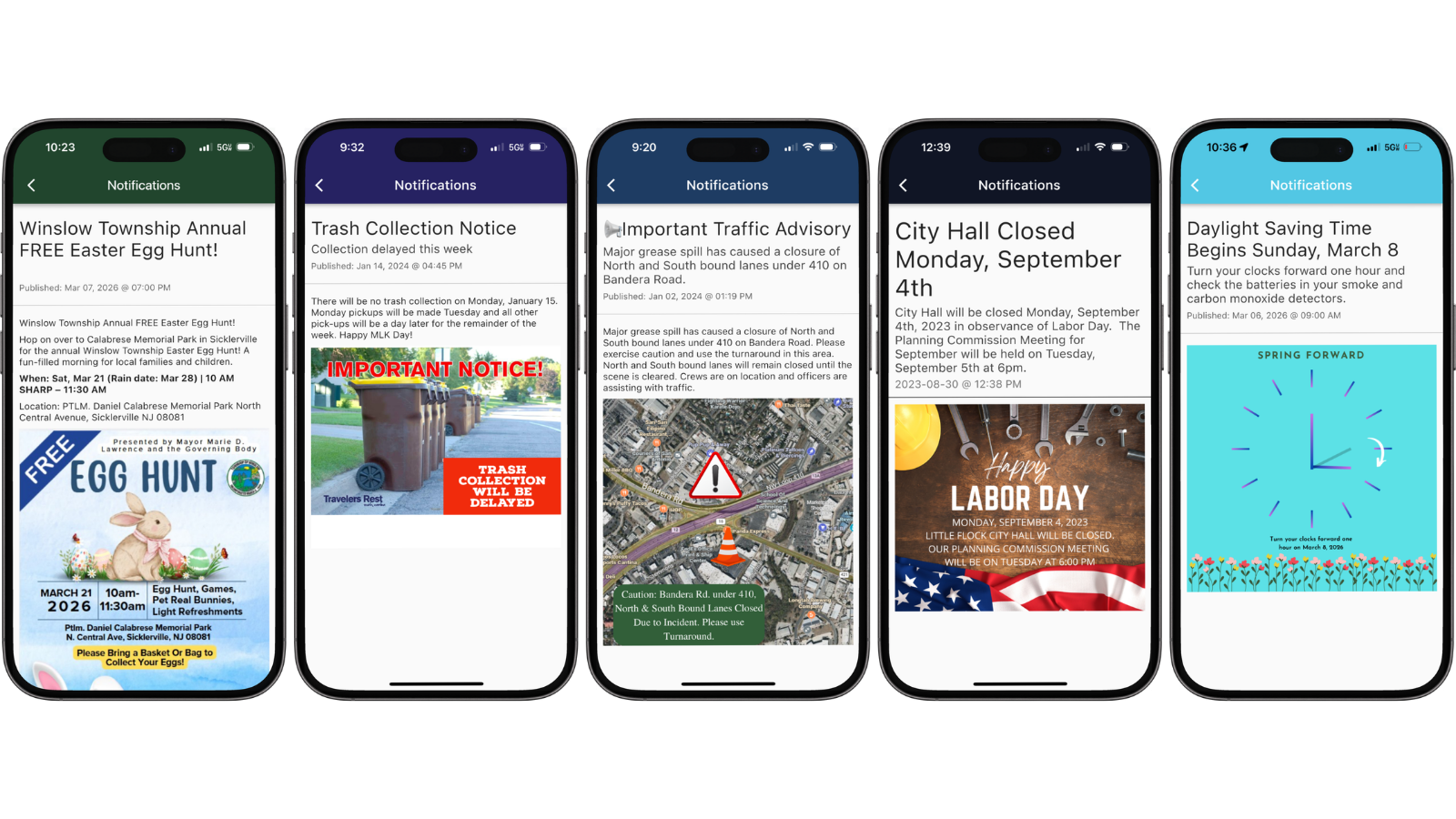
So what are they actually communicating? Events. Facility hours. Parking reminders. Boil water advisories. Council meeting notices. Road projects. The everyday information that keeps a community running — and that gets completely buried when it's posted to social media.
This post breaks down what routine, non-emergency notifications look like in practice, why they matter more than most agencies realize, and how to build them into your communication strategy starting today.
Why Routine Notifications Get Lost on Social Media
Social media is a great place to build awareness. It's a poor place to deliver information people need to act on.
Here's the problem: a post about a facility closure competes with every sponsored post, viral video, and algorithm-driven update in a resident's feed. Even if someone follows your city's page, there's no guarantee they see the message — and no way to know if they did.
Citizen notifications work differently. A push notification to your branded mobile app, a targeted SMS, or a direct email lands in a place residents actually check — and doesn't disappear into a scrolling feed. The message is there when they open it, not buried under two days of content.
The agencies in our February 2026 data weren't just reaching more residents — they were reaching residents reliably, on a schedule, about things that affected their daily lives.
What Local Governments Are Actually Communicating
Looking at the 2,330 notifications sent across 250 agencies in February 2026, the content breaks down into predictable, recurring categories — very few of which are weather alerts.
Community Events
Events are one of the most common — and highest-engagement — notification types. Whether it's a council meeting, a parks and rec program, a farmer's market, or a town hall, residents genuinely want to know what's happening in their community.
The challenge is timing. A single social post announcing an event two weeks out is easy to miss. A well-planned notification sequence — a save-the-date, a reminder three days before, and a day-of reminder — ensures residents actually show up.
Example templates:
Title: Spring Cleanup Day — Save the DateTagline: Mark your calendar for April 12Message: Join us Saturday, April 12 from 8 AM–12 PM for our annual community cleanup. Gloves and bags provided. Meet at Riverside Park. Questions? Reply to this message or visit [link].
Title: Tonight: City Council MeetingTagline: Public comment open — your voice mattersMessage: The City Council meets tonight at 7 PM at City Hall, 123 Main St. Agenda and dial-in information available in the app. All residents welcome.
Facility Hours & Closings
Residents show up to a closed office, a locked recreation center, or a shuttered library more often than any agency would like to admit. A single notification prevents a frustrating trip — and a frustrated phone call to staff.
This is one of the easiest wins in government communication. The information is always known in advance, it directly affects residents, and it takes less than two minutes to send.
Example templates:
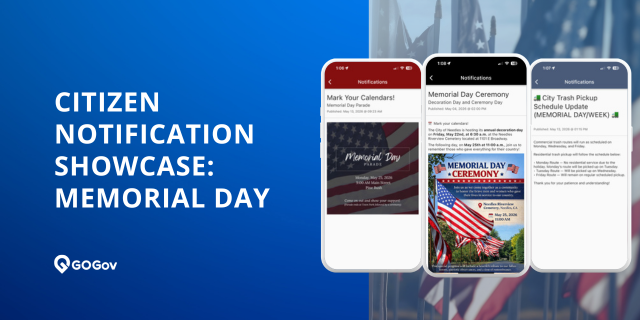
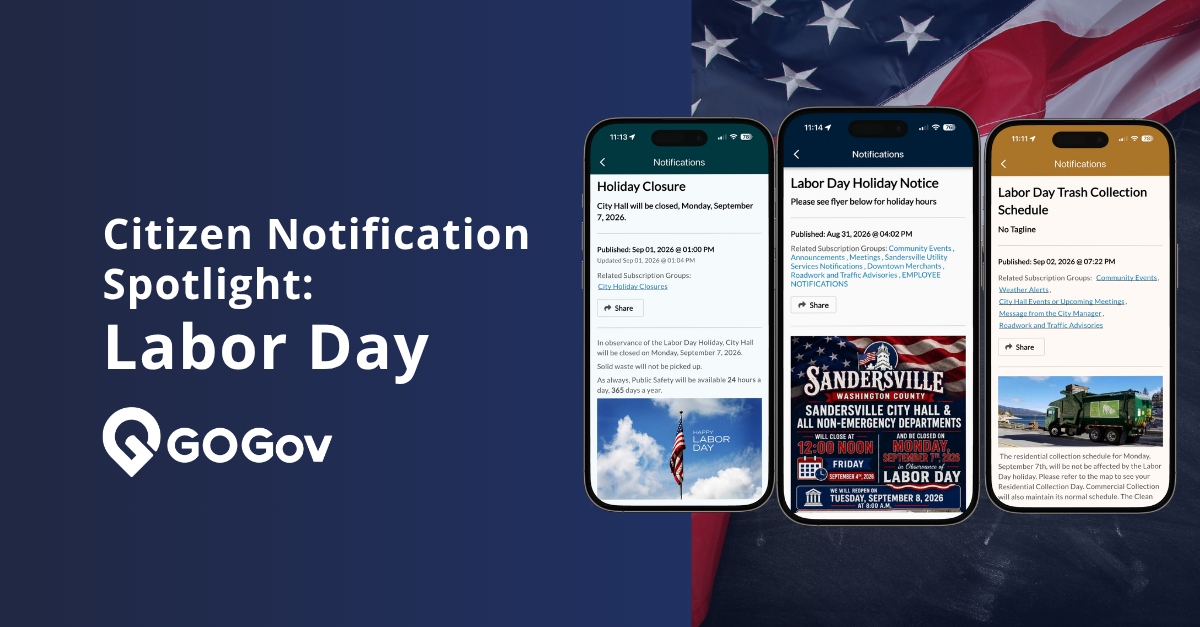
Title: City Hall Closed Monday — Memorial DayTagline: Plan ahead for next weekMessage: All municipal offices will be closed Monday, May 26 in observance of Memorial Day. We'll reopen Tuesday at 8 AM. For urgent matters, visit [link] or call our non-emergency line.
Title: Community Center — Updated Winter HoursTagline: Changes take effect December 1Message: Starting December 1, the Community Center will close at 8 PM on weekdays (previously 9 PM) and remain open 9 AM–5 PM on weekends. Full schedule at [link].
Boil Water Advisories & Water System Notices
Boil water advisories are time-sensitive, safety-critical, and absolutely cannot get lost in a social media feed. But they're also distinct from a weather alert — they're a service notification, not a public safety emergency.
Residents need to know: what's happening, which neighborhoods are affected, what they should do right now, and when they'll get an update. Multi-channel delivery — push, SMS, email, and voice for vulnerable populations — is the right approach here.
Example templates:
Title: Boil Water Advisory — Downtown DistrictTagline: Precautionary notice until further updateMessage: A precautionary boil water advisory is in effect for residents on Oak St, Maple Ave, and 3rd–7th Streets. Boil all water for drinking and cooking until further notice. We expect to provide an update by 5 PM today. Questions? Call Public Works at [number].
Title: Boil Water Advisory LiftedTagline: Water service has been restored to normalMessage: The boil water advisory for Downtown District has been lifted. Water quality has been tested and meets all safety standards. Thank you for your patience.
Parking & Traffic Notices
Construction, special events, street sweeping, snow removal — all of it affects where residents can park and how they get around. These notifications are highly local, highly relevant, and dramatically reduce calls to city hall.
Example templates:
Title: Street Sweeping Reminder — Oak St & Elm AveTagline: Move your vehicle by 7 AM ThursdayMessage: Street sweeping on Oak Street and Elm Avenue is scheduled for Thursday, March 20. Please move vehicles parked on these streets by 7 AM. Vehicles in violation may be ticketed and towed.
Title: Downtown Parking — Event WeekendTagline: Alternative lots available this SaturdayMessage: Due to the Founder's Day Festival, the Main Street lot will be closed Saturday, April 5. Free parking is available at the Civic Center garage (200 Oak Ave) with a free shuttle running every 15 minutes from 10 AM–8 PM.
Road Closures & Construction Updates
Road closures rank among the highest-engagement notification types — because residents experience the impact in real time. An informed resident who planned ahead for the detour is a very different person than one who discovered the closure on their commute.
Example templates:
Title: Main Street Closure Begins MondayTagline: Water main replacement — estimated 3 weeksMessage: Main Street between 1st and 4th Ave will be closed to through traffic starting Monday, March 24 for water main replacement. Use Oak Street or Park Blvd as alternate routes. Updates will be sent as work progresses.
Title: Road Reopened — River Road Construction CompleteTagline: Thank you for your patienceMessage: River Road is now open to through traffic. Construction has been completed ahead of schedule. All lanes and turn signals are back in normal operation.
Trash & Recycling Schedule Changes
Collection schedule changes due to holidays, weather, or route adjustments generate a predictable spike in resident calls — unless you get ahead of it. A single notification the day before eliminates the confusion.
Example templates:
Title: Holiday Collection Schedule — July 4th WeekTagline: Your trash day shifts by one day this weekMessage: In observance of Independence Day, trash and recycling collection will be delayed by one day this week. If your normal pickup is Thursday, it moves to Friday. The full adjusted schedule is available at [link].
Public Health Notices
From seasonal health reminders to service availability notices, public health communication is a core function of local government — and one that benefits enormously from direct channels.
Example templates:
Title: Free Flu Shots — This SaturdayTagline: No appointment needed at Community CenterMessage: The Health Department will offer free flu vaccinations this Saturday, October 5 from 9 AM–1 PM at the Community Center. Open to all residents. Bring your insurance card if you have one, but no one will be turned away.
Why Direct Channels Outperform Social Media for Routine Communication
This isn't an argument against social media — it's an argument for using the right tool for each job.
Social media is valuable for broad awareness, community building, and content that benefits from sharing. But for time-sensitive, action-required information, direct channels win every time.
Here's why:
Guaranteed delivery. A push notification arrives on a resident's device. A social post arrives in an algorithm. Those are not the same thing.
No competition. Your boil water advisory doesn't have to outperform a celebrity post for attention. It's the only thing in the notification.
Searchable and archived. Residents can open your city's app and see every message sent, unlike a social post that's disappeared under newer content.
Measurable. You can see who opened it, when, and on what device. Social reach estimates are famously unreliable.
According to GOGov platform data from February 2026, 98.9% of notifications were delivered via mobile push — making it the most-used channel by a wide margin, followed by email at 83.9%. SMS, Facebook, and voice rounded out the channel mix for agencies with residents who prefer or need those options.
How Consistent Communication Builds Community Trust
The agencies in our February 2026 data that sent the most notifications weren't doing so because they had more emergencies. They were doing so because they had built a communication habit.
The Town of Guttenberg, NJ sent 58 notifications in a single month. The City of Palmetto, FL sent 51. These agencies aren't larger or better-resourced than the average GOGov customer — they're just more consistent. Their residents hear from them regularly, which means residents trust the channel, which means they pay attention when something genuinely urgent is sent.
That's the compounding benefit of routine communication: it trains residents to take your notifications seriously. An agency that only sends alerts when there's a crisis can't build that trust.
What Notification Types to Start With
If your agency is new to proactive resident communication — or looking to expand beyond urgent alerts — here's a simple starting point based on what works best for GOGov agencies:
Start with predictable, recurring messages. Trash collection changes, facility hours, and council meeting reminders are easy wins because the information is always known in advance and residents consistently care about it. These are great candidates for notification templates so your team isn't typing from scratch each time.
Add event communications. Build a three-message sequence: save-the-date, three-day reminder, day-of reminder. Measure attendance and compare it to events you communicated once via social.
Layer in service notices. Boil water advisories, road closures, and construction updates are where direct notification systems earn their keep. These messages have real consequences if missed.
Build a calendar. The agencies sending 9+ notifications a month aren't winging it. They plan a month ahead, look at what's on the calendar — holidays, construction projects, scheduled maintenance, community events — and draft notifications in advance.
Ready to Go Beyond Alerts?
GOGov Citizen Notifications makes it easy for local governments to reach residents across push, SMS, email, voice, and social media — all from a single dashboard. No per-user fees. No per-message charges. Unlimited notifications, all included in your annual subscription.
Every GOGov customer also gets a free branded mobile app — so residents have one place to receive all your messages, submit service requests, and stay connected to their community.
See how Citizen Notifications works →Schedule a free demo →
Data cited in this post is sourced from GOGov platform activity across 250+ agencies during February 2026, covering 2,330 notifications over 28 days.
.png)


.png)