.png)
Public Information Officers and communication professionals carry one of the most visible and high-pressure roles in local government. On any given day, you're drafting urgent community alerts, coordinating messaging across departments, fielding resident inquiries, promoting upcoming events, and making sure the right information reaches the right people before the wrong story does.
The problem is that most PIO teams are trying to do all of that with a patchwork of tools — a mass email platform here, a social media scheduler there, maybe a shared spreadsheet to track requests. When a water main breaks or a road closure goes up, that fragmented setup slows everything down. The right local government software for PIOs brings your communication tools into one place, so you can reach residents faster, track engagement, and spend less time managing logistics and more time doing the job.
Common Challenges PIO and Communications Departments Face
Getting Timely Information Out Across Multiple Channels
When something important happens — a road closure, a boil water advisory, a canceled council meeting — residents expect fast, accurate information. But if your agency's notification tools are scattered or require IT involvement every time you send an alert, that speed disappears.
Many PIO teams rely on a single channel like email or social media, which means a significant portion of your community never sees the message. Reaching residents where they actually are requires text, push notifications, email, and more — ideally from a single dashboard.
Maintaining Resident-Facing Technology Without Deep IT Support
PIOs are communicators, not developers. But in many local governments, updating a resident-facing app, managing notification lists, or launching an online portal requires submitting a ticket and waiting. That dependency creates delays and limits your ability to respond in real time.
Maintaining accessible, up-to-date technology for residents should not require constant IT intervention. The right local government apps are designed so communications staff can manage them directly — no coding required.
Lack of Visibility Into Resident Concerns and Service Requests
A PIO's job is not just to push information out — it's to understand what residents care about and respond accordingly. But if service requests are sitting in a public works inbox and resident feedback is scattered across social comments and voicemails, there's no way to see the full picture.
Without centralized data, it's hard to identify what issues are driving the most contact, whether your messaging is landing, or where trust gaps exist in your community.
One-Way Communication That Doesn't Drive Real Engagement
Posting a notice on a website or sending a mass email is not the same as engaging your community. Residents want to feel heard — they want to submit requests, ask questions, and get a response. When the only path to local government is a phone call during business hours, engagement suffers.
The shift from broadcast communication to two-way dialogue is one of the defining challenges for modern PIOs, and it requires the right tools to make it practical at scale.
How GOGov Helps PIO and Communications Departments
GOGov is a suite of local government software tools built specifically for municipal agencies. Three of its core products are directly relevant to the work PIOs do every day.
Citizen Notifications: Reach Every Resident, Every Channel
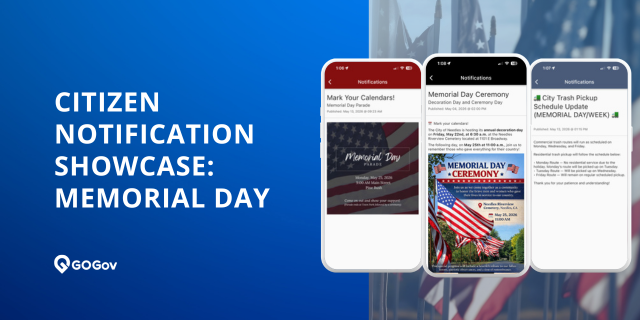
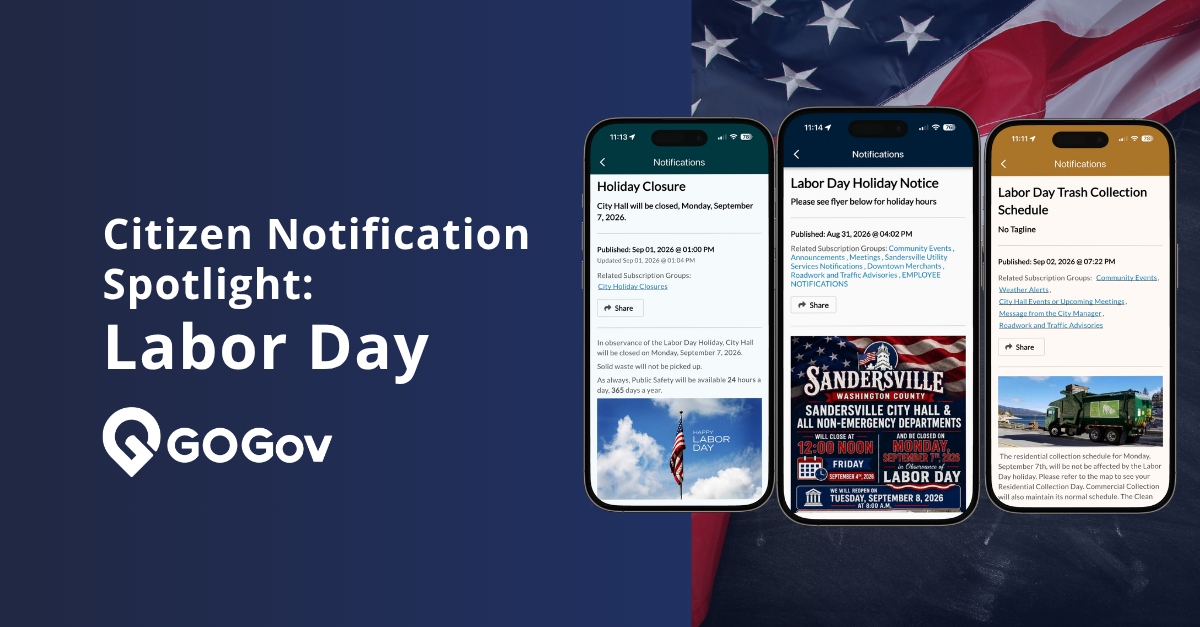
GOGov's Citizen Notifications platform lets your team send targeted, multi-channel messages to residents by geography, neighborhood, or city-wide — all from one dashboard. Whether you're sending an urgent road closure alert, a reminder about a community meeting, or a seasonal service update, your message goes out by text, email, push notification, and voice simultaneously.
No more logging into three different platforms. No more wondering if the right residents got the message. PIOs can build and send notifications without IT support, and the delivery confirmation data shows exactly who received and opened each alert.
Citizen Requests/CRM: Two-Way Engagement at Scale
GOGov's CRM and 311 platform gives your agency a centralized place to receive and manage resident requests, questions, and feedback. Residents can submit through a web portal or the mobile app. Every submission becomes a trackable record with a timestamp, category, and contact history.
For PIOs, this means you can see what issues residents are raising in real time, assign follow-up to the right department, respond with consistent, pre-approved messaging using saved replies, and close the loop with the resident — all without a single phone tag. The reporting tools surface trends in resident concerns so you can get ahead of issues before they become bigger stories.
Municipality Mobile App: Your Agency, In Every Resident's Pocket
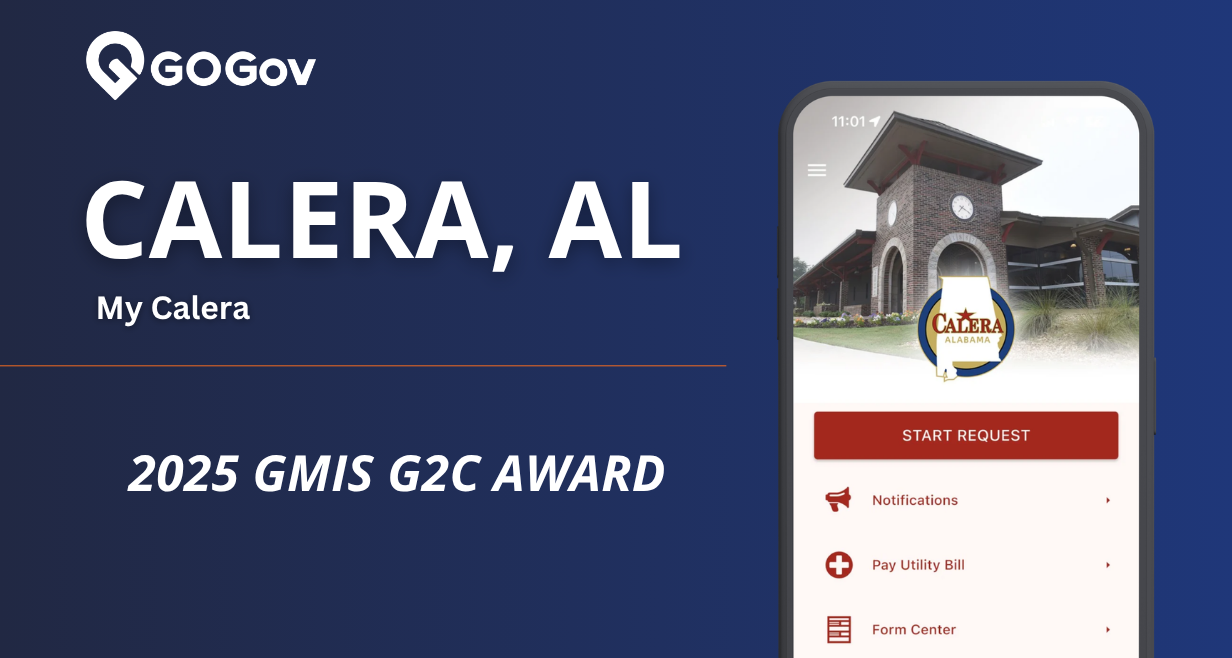
GOGov's branded mobile app is included as part of the platform and lives on the Apple and Google app stores under your agency's name and branding. Residents can receive push notifications, submit service requests, and access information about your agency directly from their phone.
For PIOs, the app creates a direct, trusted channel to your community that doesn't compete with the noise of social media algorithms. It's the closest thing to a hotline between your agency and every resident who downloads it — and you control the message.
What This Looks Like in Practice
Here is a straightforward example of how a GOGov-powered communication workflow runs for a PIO during a time-sensitive situation.
Step 1: An issue surfaces. A resident submits a request through the GOGov portal reporting a water main break on a busy street. The case is automatically logged with location, time, and contact info.
Step 2: PIO is looped in. The case is flagged for the communications team. Within minutes, the PIO can see the details and begin drafting a community notification — without waiting for a briefing call.
Step 3: Alert goes out across all channels. The PIO builds a targeted notification in GOGov and sends it to residents within a three-block radius via text, email, and push notification. A city-wide social post is also drafted for broader awareness.
Step 4: Residents can respond. Residents who have follow-up questions submit them through the app or portal. The PIO responds using saved reply templates, keeping messaging consistent and response time short.
Step 5: Issue is resolved and residents are notified. When the repair is complete, the PIO sends a second notification confirming the resolution. The full case record — including the original report, all outbound communications, and resident interactions — is stored and searchable.
This is the kind of workflow GOGov's PIO use case is built to support.
FAQs for PIOs Using GOGov
Q: What is local government software for PIOs?
A: Local government software for PIOs refers to digital tools that help public information officers manage resident communications, send multi-channel notifications, track community requests, and measure engagement — all from a single platform. It replaces disconnected tools and manual processes with a centralized, trackable system.
Q: Can PIOs send notifications without involving IT?
A: Yes. GOGov's Notifications platform is designed so communications staff can build, schedule, and send alerts independently — no technical background required. You can target by geography, category, or list and send across text, email, push, and more in a single workflow.
Q: How does GOGov help with two-way resident communication?
A: GOGov's CRM and 311 integration allows residents to submit requests and questions through a web portal or mobile app at any time. PIOs can manage those interactions centrally, respond with consistent messaging, and track outcomes — shifting from one-way broadcasting to genuine community dialogue.
Q: Does GOGov include a branded mobile app?
A: Yes. Every GOGov Citizen Notifications and Citizen Request Management customer receives a branded mobile app available on the Apple and Google app stores at no additional cost. The app is customized with your agency's name and logo, giving residents a direct, trusted digital connection to local government.
Q: Is GOGov built specifically for government communications teams?
A: GOGov is a civic software platform built exclusively for local government agencies. It includes a dedicated PIO and communications use case that maps its tools to the specific workflows communications professionals handle daily — from community alerts and event promotion to resident request management and engagement reporting.
Ready to Modernize Your Government Communications?
If your PIO team is still juggling multiple platforms, chasing down resident feedback, or sending alerts that only reach part of your community, there is a better way. GOGov gives public information officers the tools to reach every resident, manage two-way engagement, and track what's actually working — without adding complexity or IT dependency.
Book a demo and see how GOGov works for PIO and communications teams like yours.
.png)


.png)