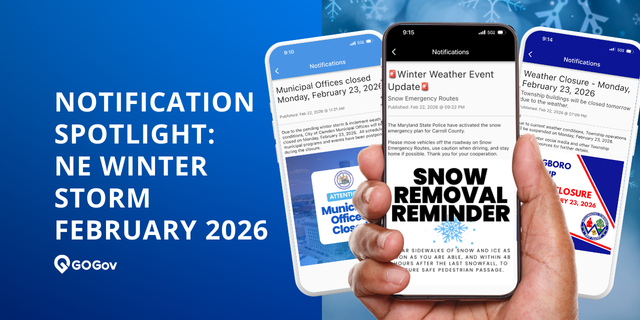
When a major winter storm bore down on the Northeast during the week of February 17–24, 2026, local governments didn't scramble to figure out how to communicate. They were already ready — and the numbers show it.
Across New Jersey, Massachusetts, and New York, GOGov-powered agencies sent nearly 400 storm-related notifications in a single week, reaching residents through push notifications, email, SMS, Twitter, Facebook, and Instagram — all from one dashboard.
Here's how they did it, and why it mattered.
The Storm by the Numbers
During the Feb 17–24 reporting period, the GOGov platform recorded:
- 665 total notifications sent by active agencies
- 389 storm-related notifications — 58% of all activity that week
- 142 agencies sending storm-related alerts
- Notification types spanning snow, ice, road closures, driving restrictions, power outages, sanitation delays, office closures, and more
This wasn't a trickle. It was a coordinated, multi-agency, multi-channel communications response playing out in real time.
The Story in Three Acts
Act 1: The Warning Phase (Feb 21–22)
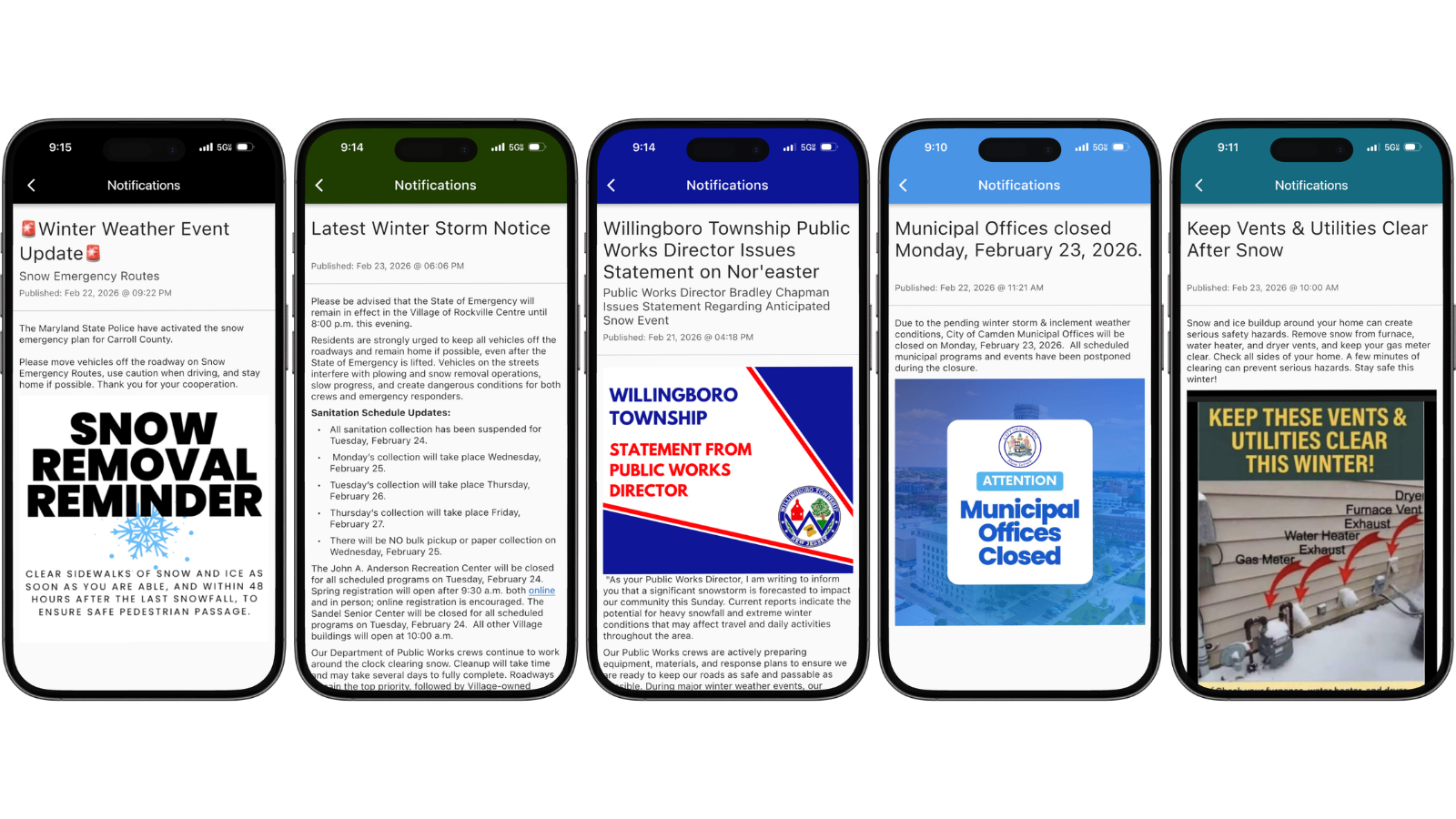
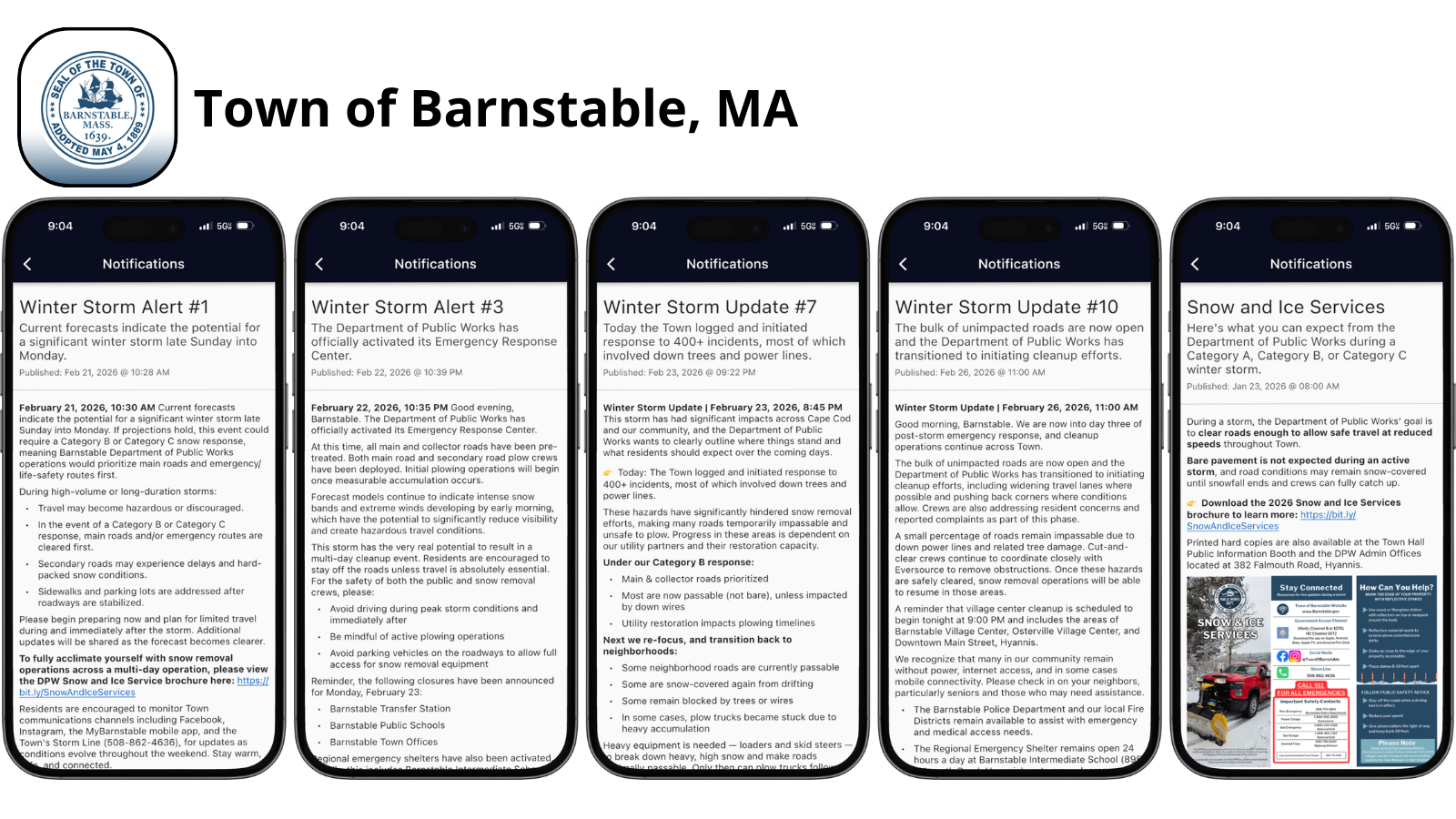
Before the worst of the storm arrived, agencies were already reaching out. Township of Warren, NJ pushed a "Winter Storm Warning — Prepare Today" notification on February 21 and followed it hours later with a "Severe Winter Weather" alert via email, mobile push, and SMS. Town of Barnstable, MA issued "Winter Storm Alert #1" — the first in what would become a numbered series of seven updates sent over the next 72 hours — so residents always knew an update was coming.
That proactive approach set the tone. Residents weren't left wondering what was happening. They knew their local government was watching.
Act 2: The State of Emergency (Feb 22–23)
As conditions deteriorated, governments escalated quickly. Township of Warren declared a State of Emergency effective 12pm on February 22, then issued a Mandatory Travel Restriction that same night — blasting it via email, mobile, and SMS simultaneously. Borough of Haddonfield, NJ issued its own "NJ Mandatory Travel Restriction Begins Tonight, 2/22 at 9 pm" notification, ensuring residents had time to get off the roads before the restriction took effect.
By the early hours of February 23, City of Camden, NJ — the highest-volume storm communicator in the GOGov network that week — was sending overnight alerts like "Drive slow & give DPW space so they can work safely" and coordinating notifications about water main repairs made urgent by the freezing conditions.
Meanwhile, Borough of Haddonfield was notifying residents that "Crews Are Plowing — Parking on the Street Is Prohibited During a Snow Emergency" and following up with real-time "Plowing Updates" throughout the day.
Cherry Hill Township, NJ sent a "Trash & Recycling Update" so residents didn't pile garbage at the curb during an active storm. Town of Barnstable proactively alerted residents to the temporary closure of the Barnstable Transfer Station and closed Sandy Neck Beach — showing how the platform handles everything from safety alerts to operational communications in a single workflow.
Act 3: The Recovery (Feb 23–24)
Post-storm, agencies flipped the script. Township of Warren pushed a "NJ State Travel Restriction Lifted" notification — the exhale residents had been waiting for. City of Camden sent an "Update — Repairs are complete" follow-up so residents knew the infrastructure issue was resolved. Town of Barnstable continued its numbered update series through "Winter Storm Update #7" at 2:22 AM on February 24, keeping a consistent thread of communication from first alert to all-clear.
What Made This Work: Multi-Channel in One Place
What stands out across every one of these agencies isn't just that they communicated — it's how completely they communicated.
Agencies like Borough of Haddonfield and Town of Guttenberg, NJ reached residents through email, mobile push, and Twitter simultaneously. Cherry Hill Township coordinated email and mobile for utility updates. City of Camden layered in SMS for the highest-priority declarations. Village of Lindenhurst, NY leaned on mobile push for rapid DPW and sanitation updates.
Every channel. One dashboard. No extra cost per message.
That's the GOGov Citizen Notifications platform — built specifically for local governments that need to reach every resident, regardless of how they prefer to get information.
Is Your Government Ready for the Next Storm?
These agencies were ready because they had the right tool already in place — and had practiced using it for routine communications long before a blizzard hit. The best time to set up a multi-channel notification system isn't during an active state of emergency.
GOGov Citizen Notifications gives your agency push, SMS, email, voice, and social — all in one platform, at a price built for local government budgets.
.png)


.png)